
간행물
동물자원연구 KCI 등재 Annals of Animal Resources Sciences
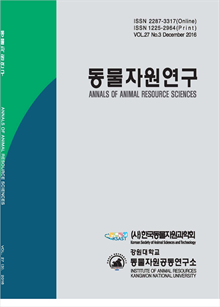
- 발행기관 강원대학교 동물자원공동연구소
- 자료유형 학술지
- 간기 계간
- ISSN 1225-2964 (Print)2287-3317 (Online)
- 수록기간 1990 ~ 2026
- 주제분류 농수해양 > 축산학 농수해양 분류의 다른 간행물
- 십진분류KDC 527DDC 636
권호리스트/논문검색
제37권 2호 (2026년 6월) 4건
1.
2026.06
구독 인증기관 무료, 개인회원 유료
This study examines post-retirement aftercare systems for racehorses, emphasizing that racehorse welfare extends beyond management during racing careers to encompass the quality of life after retirement. Through a comparative policy analysis of aftercare systems in the United States, the United Kingdom, France, and Japan, this study identifies how different countries institutionalize responsibility for retired racehorses and address welfare risks arising after racing careers end. The analysis reveals that each country targets distinct welfare risks through different policy mechanisms, including certification-based quality management of aftercare organizations (United States), tracking and lifetime traceability of individual horses (United Kingdom), institutionalized separation of pathways based on transition potential (France), and public authority–led transition management (Japan). These systems operate not through single policy instruments, but through combinations of regulatory, organizational, and financial mechanisms designed to minimize welfare gaps throughout post-racing life. In contrast, South Korea’s current policies have achieved measurable outcomes by focusing on riding and leisure conversion programs but remain limited in addressing long-term welfare monitoring and protection for horses that are difficult to retrain or rehome. Based on the comparative analysis, this study proposes policy directions for Korea, including a shift toward aftercare organization–centered governance, establishment of post-retirement monitoring systems, institutionalization of safety nets for non-convertible horses, and phased development of an integrated aftercare governance framework. These recommendations aim to expand existing policies toward a comprehensive, welfare-oriented aftercare system that ensures responsibility for all retired racehorses regardless of post-racing outcomes.
4,000원
2.
2026.06
구독 인증기관 무료, 개인회원 유료
This study examined the current status of pig production, manure treatment, and odor control in Jeju to identify sustainable management measures for the region’s livestock industry. Despite the relatively stable maintenance of pig numbers at approximately 0.5–0.55 million head, pig manure accounts for 73% of total livestock manure in Jeju, presenting a structural challenge due to limited treatment capacity and geographical constraints inherent to island regions. While wastewater purification and centralized treatment systems have expanded in recent years, odor complaints have continued to rise, surpassing previous levels and becoming a primary source of conflict with local residents. Seasonal and diurnal odor measurements showed that odor concentration decreased during winter due to reduced ventilation, but increased significantly from March to November when external temperatures required greater air exchange. Notably, the fourth quarter exhibited relatively high odor levels during evening and midnight hours, likely caused by stagnation of exhaust air under minimum ventilation operation. Regions such as Aewol, Hallim, and Daepo recorded particularly strong odor intensity, emphasizing the need for site-specific odor mitigation and operational improvement. Although analytical results indicated a gradual decline in measured odor concentration over multiple years, complaints did not decrease correspondingly, demonstrating that quantitative reduction alone does not guarantee perceptual improvement for nearby residents. Therefore, effective odor management in Jeju must focus on seasonal and time-specific control strategies, integration of scrubbing-based exhaust treatment, enhancement of liquid manure circulation and sludge removal efficiency, and targeted consulting support for high-impact areas.
4,000원
3.
2026.06
구독 인증기관 무료, 개인회원 유료
This study aimed to develop a water spray-based removal technology for floating solids accumulated on the upper layer of slurry in liquid manure circulation systems, which hinders the long term and continuous operation of these systems in swine farms. The performance of floating solids removal was evaluated by varying the number of nozzles, nozzle diameter, and pump flow rate. Increasing the number of nozzles from four to seven substantially improved overall removal performance, with the seven-nozzle configuration demonstrating the highest removal amount and rate. Nozzle diameter was identified as a key design parameter balancing cleaning speed and water-use efficiency. The 2 mm nozzle provided the best balance between removal time and water consumption, while larger diameters tended to reduce removal efficiency because spray pressure was distributed over a wider area. In the pump flow rate comparison, the 140 L/min condition slightly increased removal time but reduced water consumption, making it the most efficient option for long term operation. This condition reduced the total spray volume required to reach the target removal level, suggesting strong potential to improve both economic feasibility and resource efficiency. Overall, the optimal operating combination for maximizing floating solids removal efficiency was determined to be seven nozzles, a 2 mm nozzle diameter, and a pump flow rate of 140 L/min. These results provide practical design criteria for integrating spray based floating solids control into existing pit circulation systems and offer a basis for future field scale validation under different slurry properties, pig housing structures, and seasonal operating conditions.
4,000원
4.
2026.06
구독 인증기관 무료, 개인회원 유료
The gut microbiota of companion animals is recognized as a key factor involved not only in digestion and nutrient metabolism, but also in immune regulation and disease susceptibility. Dietary composition plays a crucial role in regulating this gut microbial environment. Insect protein, recently attracting attention as a sustainable protein source, is being proposed as an alternative feed ingredient that can meet the nutritional needs of companion dogs and cats. Rather than drastically altering the overall diversity of the gut microbiota, insect protein-based diets tend to induce gradual changes in specific microbial communities and microbial-derived metabolites. These changes suggest the possibility of interactions with the host immune response. In particular, gut microbial metabolites are known to influence immune homeostasis through association with TLR, NF-κB, and MAPK signaling pathways. However, studies directly elucidating the molecular mechanisms by which insect protein-based diets affect the gut microbiota-immune axis in companion animal models are limited. In the future, systematic, mechanism-focused research will be needed to clarify whether a diet utilizing insect proteins can contribute to the improvement of immune homeostasis and health in companion animals through regulation of intestinal microflora.
4,000원
